

Paperback vs Hardcover vs eBook: Which Format Is Right for Your Book?
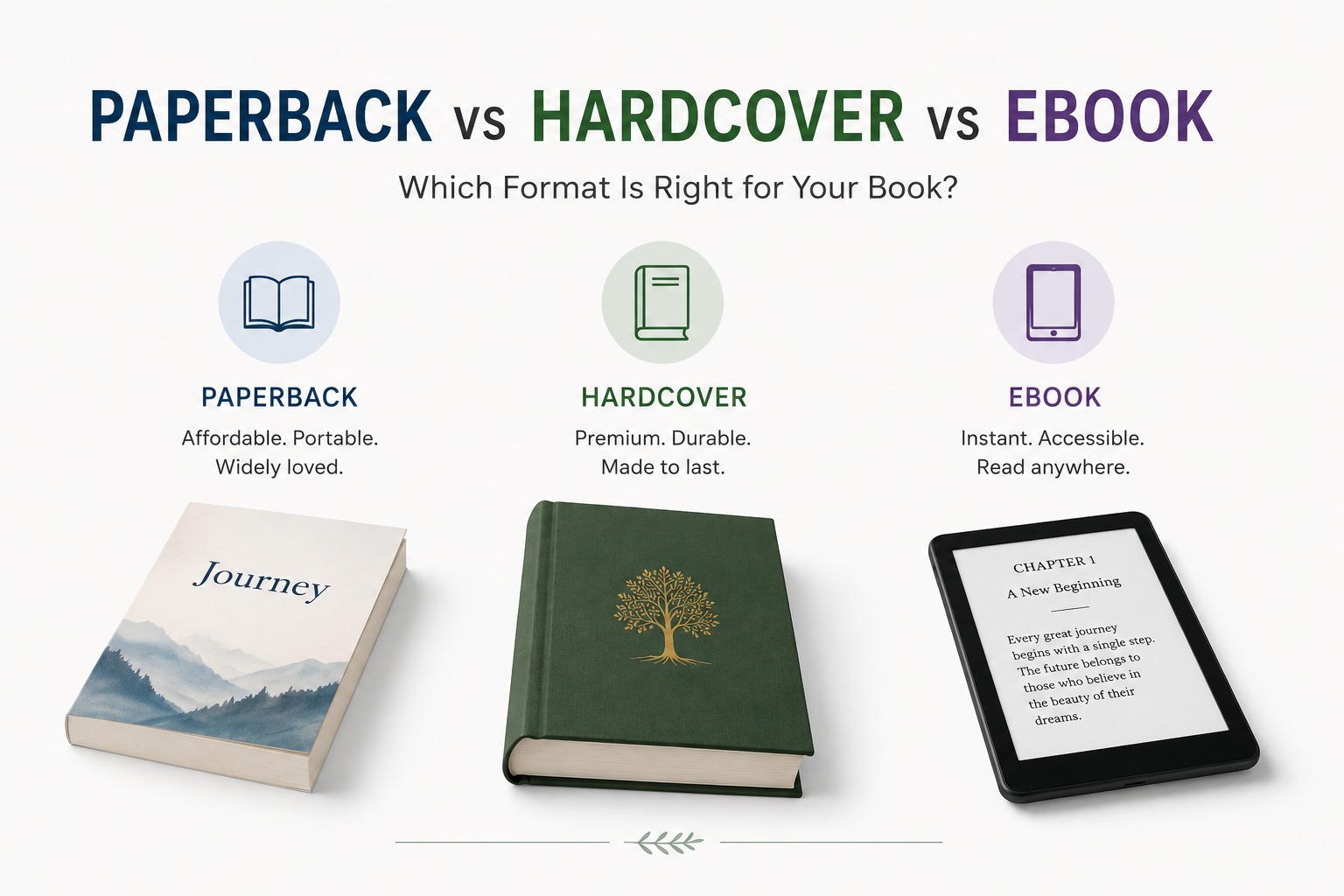
Choosing the right format is one of the most important decisions you’ll make when publishing your book. Today’s self-publishing platforms allow authors to publish paperback, hardcover, and eBook editions, each offering unique advantages depending on your audience and publishing goals.
Understanding the differences between these formats will help you create a better experience for your readers while maximizing your book’s reach.
Paperback
Paperback books remain the most popular choice for independent authors. They are affordable to produce, easy to ship, and widely accepted by readers across nearly every genre.
Whether you’re publishing a novel, memoir, business book, or educational guide, a professionally formatted paperback offers a clean reading experience and is often the first format readers choose to purchase.
Best for:
- Fiction
- Non-fiction
- Memoirs
- Business books
- Educational books
Advantages
- Lower printing costs
- Lightweight and portable
- Affordable for readers
- Available through major self-publishing platforms
Hardcover
Hardcover books provide a premium reading experience. They are more durable, visually appealing, and often perceived as higher-value editions.
Many authors choose to release a hardcover version alongside a paperback to appeal to collectors, libraries, and readers who prefer premium books.
Best for:
- Coffee table books
- Gift books
- Premium editions
- Children’s books
- Collector’s editions
Advantages
- Professional appearance
- Longer lifespan
- Higher perceived value
- Excellent for gifts
eBook
Digital books continue to grow in popularity thanks to their convenience and accessibility. Readers can purchase and download an eBook instantly, making it an excellent option for reaching a global audience.
Unlike printed books, eBooks use reflowable text that automatically adapts to different screen sizes and devices.
Best for:
- Global distribution
- Fast publishing
- Budget-conscious readers
- Kindle and mobile device users
Advantages
- No printing costs
- Instant delivery
- Adjustable font size
- Worldwide availability
Which Format Should You Choose?
The best choice depends on your goals.
If you’re publishing your first book, many authors begin with a paperback because it offers an excellent balance between affordability and professionalism.
If you want to provide readers with premium options, adding a hardcover edition can increase the perceived value of your book.
An eBook is an excellent addition because it allows readers around the world to purchase your book instantly without shipping costs.
Many successful self-published authors release all three formats, giving readers the freedom to choose how they want to enjoy the book.
Why Professional Formatting Matters
Each publishing format has different technical requirements.
A paperback requires proper margins, bleed settings, page numbers, and print-ready PDF files.
Hardcover books require additional consideration for spine width, cover dimensions, and binding.
eBooks require clean formatting with responsive layouts that display correctly on Kindle devices and other eReaders.
Using the same file for every format rarely produces the best results. Preparing each edition individually helps ensure a professional appearance across all publishing platforms.
Final Thoughts
There is no single “best” publishing format. The right choice depends on your audience, budget, and publishing goals.
Whether you publish a paperback, hardcover, eBook, or all three, professional formatting ensures your readers enjoy a polished and high-quality reading experience.
A well-formatted book not only looks professional but also reflects the care and effort you’ve invested in your work.
Need help preparing your book for publication? I specialize in professional formatting for paperback, hardcover, and Kindle eBooks, creating publication-ready files that meet Amazon KDP and other self-publishing platform requirements.